Coaching gives the client the opportunity to discuss openly and understand how to think through, how the client could approach things and also, to accept things they may have no control over. It is a really good opportunity to give themselves some headspace to really think deeply, with no judgement in a safe environment – to really be in the moment.
The coach will listen to the client and challenge thinking by questioning and provide another ‘lense’ to view perceived issues and how to overcome them. The client must be willing to seek what is in the realms of possibility. With interesting questioning, this can be a real opportunity for the client to obtain more than their initial goals.
I have and actually several of my colleagues have. Do you and if so, what’s your story?
What is Imposter Syndrome?
The person who evidently is successful, has feelings of inadequacy, of not being good enough. They suffer from chronic self-doubt. Even though they may have external proof of their success and competence, this feeling can deeply undermine their confidence in themselves, not necessarily the jobs that they do. Often, people who suffer with Imposter Syndrome are perfectionists.
They often hold themselves back for fear of failure, when they are most probably the ones who would succeed the most. Does this sound familiar to you? It does to me and it makes me feel sad that I could have achieved so much more if I was gentler with myself and took a step back. This came with being coached, having the right support network around me and the experience I have getting older.
Why do people suffer from Imposter Syndrome?
There is research that it is believed that it lies with the labels parents give to members of the family. For example, one child being named ‘the intelligent’ one, another as the ‘sensitive’ one. Also, that it may be that children are identified as more superior to their sibling, or more perfect. This then feeds into the feelings of ‘not good enough’.
I’m not sure I agree with that, my mum always told me I could do anything I wanted to. However, we were from a one parent family, my dad wasn’t around much and I was really the second mum to my two brothers, whilst my mum was out working to put food on the table and a roof over our heads. I felt embarrassed that we lived in a council house, however, we were always well clothed and well fed (even if the electric did go sometimes – but even my mum would make that fun with ghost stories around the fire).
So, is it from the parenting or our environment that feeds these feelings?
The feelings of not being able to fail and the pressure you put on yourself, or that you will be found out that you aren’t as good as people around you think you may be. That you feel like a fake, that you may be faking it until you make it? Is this really it though? Or is it that you just don’t want to let anyone down, including yourself?
Or is it luck? I’ve often said that I’ve been lucky to get where I am because of the managers around me. However, those who led me (the good ones and I’ve had a few bad ones), must have seen something in me. I still speak to one of my old bosses from nearly 30 years ago. He said to me ‘I’m proud of what you’ve achieved – ‘one of mine’! Talent will out’. So, is it luck, or is it talent? Myself and another colleague were chosen for a ‘Talent Group’ from another amazing leader, our Sage we used to call him. So, shouldn’t that give me more a sense of not suffering from Imposter Syndrome and being able to take compliments about how well I’ve done?
So how to you reduce the feelings of Imposter Syndrome?
As I’ve got older, this has begun to decrease. Maybe it’s because I am myself now, maybe I don’t have to pretend to be something I’m not (or am, however you look at it). Maybe I have started to believe and live my own values and beliefs more and more. I think coaching really got down to the nub of this many years ago. If it doesn’t feel right, it’s not right. Trust your gut.
Recognising and Dealing with The Imposter Syndrome
When you start feeling those imposter feelings – check yourself. Be more aware. Challenge yourself with questions – is this feeling real or is that monkey on your shoulder speaking in your ear that are not good enough.
Think about what you are hearing and remind yourself that you don’t know everything, no-one knows everything. That this is normal and you are continually learning.
Talk about it. The more you do, the more you find that other people feel like it too. Actually, it’s rather refreshing when you have these chats that you are not on your own. In fact, you can support each other in calling each other out and keeping it real, reminding each other that you believe in them and actually, what they have done right and what has been successful.
There will be times when you will experience a lack of self-confidence, you may feel out of your depth and self-doubt is an absolutely normal reaction. However, how do we learn? If a baby just starting to toddle falls down, your natural response is ‘upsey daisy, up you get’. Be gentle with yourself, you are allowed to be human.
Note down your successes. Not to give you a big head, but for you to remind yourself how much you have learned, how far you have come, who you have done this with, usually it’s a team effort. I’m sure you will have no problem in telling your team how proud of them you are. Tell yourself that – you are allowed to be proud of yourself. Use this every time you have a wobble. Those around you will remind you too.
Coaching
I have personally been coached around this area. Even though I came across as confident, I was not within myself. As I learned more about myself and my values and beliefs, talking through these, it really helped me to start being at one with myself. I sought out reading materials and challenged myself, as well as surrounded myself with a good support network.
When you do this, you also pay it forward when you have friends and colleagues who suffer with it. We all want to do better, we want to do our best, ensuring we are ‘value for money’ for our employers, but more importantly, that we want to make a difference and we do.
You will continue to learn more about yourself. Be brave, be courageous, be gentle with yourself and most importantly, be yourself!
Please feel free to leave your comments on this issue and how you tackle it and any tips you can share with others.
Subscribe to my future blogs by clicking Skyline Coaching Blogs and adding your email address.
Supporting Materials
I am an avid reader of learning more about how we feel as humans, in learning how to be better, in learning how I can support those around me. These are a couple of great books if you want to learn how your mind works, how to learn more about yourself and usually, doing something you’ve worried about doing, isn’t as bad as you think it is.
I regularly have a self care day, I especially like a spa day. When I sit in the spa, thinking how far I’ve come from the skinny shy kid from a one parent family and for not feeling guilty for spending a day on me. That I finally believe in myself and I am worthy of the nice things in life.
Photo by Islandworks
On one particular day, the sun is shining, I’m relaxing in the hydropool speaking to a lady who said she needs to lose weight and not drink so much. We put so much pressure on ourselves to be perfect. I start talking to her about a radio presenter who passed away that weekend and she starts talking about her son who listened to him every morning. Such a shock that he died relatively young, in the scheme of things. Her son joins us and says how sad he is that he can’t listen to him anymore.
I tell them that I had also been to a funeral the week before for a friend’s husband that passed away only aged 53.
We start chatting about living life to the fullest, to be happy, that if you lose too much weight you go wrinkly. To try to be healthy, but to enjoy life, as it’s so short. Have the cake, raise a glass, laugh with your loved ones.
I leave them to ponder and relax in the sunshine.
Photo by Engin Akyurt
I go back to the book I regularly read called ‘Coffee Self-Talk’ by Kristen Helmstetter. It’s my go to book when I go to the spa and those days when I need that reminder to pick myself up, if I’m having a down day. It’s a well thumbed book given to me by a good friend.
It opened my eyes on how I used to talk to myself and that now I stop that talk as best as I can. In fact, I promote positive self-talk to my clients. This is a reminder to follow my own suggestion and for it to become part of my day.
Until you are aware of it, it’s really easy to talk to yourself badly or put yourself down. What do you say to yourself?
I used to say I wasn’t good enough, I needed to prove that I was worthy of the good job, the nice car, the nice holidays, my husband and son, my home.
Now I think, I’ve worked hard to get where I am, it’s not been easy. It hasn’t been handed to me on a plate. Of course, I’ve had good people around me, but they may not have invested their time in me unless I showed that I was capable, willing to learn and work hard. I am me. That I was always capable even if I am imperfect (as many of us are – wouldn’t life be boring if we were all perfect?).
When I’m having a wobble, I say to myself, you’ve come through worse. You can do anything you put your mind to. You have grit and determination. You don’t give up, in fact, you dig your heels in when anyone thinks you may fail.
This gives me strength and courage. We all need that every now and again.
I share my stories of how I’ve got to where I am now. To share with those who want to succeed and maybe don’t think they can, that they need to speak positive self-talk to themselves. They have to believe in themselves, as I do. I’m not afraid to say that I have been broken at times, but I’ve worked hard on myself to be better, to take care of me, that I’m worth it and more.
Do you do the same? If you do, what do you say to yourself?
If you don’t think you are worth it, what can you say to yourself every day to make you be the best person you can be? You’re in there, you just need to let yourself out to live your best life on as many days as you can. The more you do this, the more it will become a permanent part of your life.
Life is short. Make it count, be happy, laugh, love and live as best a life as you can.
If you’d like some help on positive Self Talk, invest in the book by Kristen Helmstetter. Invest in yourself with coaching to bring out your best self. Self-belief can be life changing.
It’ll be worth it!
If you want to work on this to improve yourself, feel free to contact me for a free discovery call. Your challenge is to live your best life and I can support you in coaching you to walk the talk. Interested? Book your free slot here Skyline Coaching Bookings
Kriza Tuffin is an online writer. She’s a new writer and contributor at contentcampfire.com. She writes about leadership development for professionals and the like.
In today’s modern business world, many challenges may arise at unexpected moments. With that in mind, the need for effective leadership is more evident now than ever. The urgency to respond to challenges with great strategy, intelligence, and expertise is a must for keeping a business thriving. Thus, leadership training is vital to a corporation’s health. In fact, 83% of organisations agree that developing leaders at all levels is essential. In this article, let’s dive deeper into the realm of leadership training, including its importance and how it benefits your company.
What is Leadership Training?
Leadership training is instruction developed for teaching employees exceptional leadership skills. There are plenty of mediums for this kind of training like live speaking, videos, audio recordings, meetings, and virtual courses, among others. Some types of leadership training that organisations utilise include:
Leadership training seminars
Executive leadership training
Leadership conferences
Leadership workshops
Online training
Benefits of Leadership Training to Professionals and Organisations
As a professional, leadership training should be of utmost importance. After all, successful leaders know how to transform and enhance organisations and engage employees to achieve better results. Here are the top professional and organisational benefits of leadership training:
Better productivity
When managers undergo training to become influential leaders, the overall productivity of the workforce increases. Skilled leaders provide better instructions to staff, ensuring they perform at or above expectations. They also improve at assessing problems, managing situations, and, most importantly, providing creative and sensible solutions. Plus, if an employee establishes good leadership skills, people around them develop those skills, too.
Lower staff turnover
Employees trusted with considerable roles in a company’s future respond with loyalty. This ultimately reduces hiring costs for a business. After all, developing current employees is always less expensive than bringing on new recruits. It saves on hiring advertisements, agency fees, HR, travel, relocation expenses, and many more. Furthermore, you’ll see a significant reduction in employees moving to other companies due to poor management. With a properly trained manager, the company’s turnover rate will be positively affected.
And it’s not just about lower turnover and savings. Investing in employees is also a way to support the development of future leaders. Your company is better served by helping leaders create more leaders instead of more followers. When you empower your teams through leadership coaching, you not only strengthen individuals, but you also strengthen your business and its future growth potential.
Improved risk management
Employees trained in managing potential risks can make valuable decisions for a company or business. Leadership training hones their strategic ability and risk management skills. This, in return, adds substantial value to the future of a business. In addition, empowering both managers and team members to take ownership of problem-solving and business solutions further supports future leaders.
Excellent project leadership and teamwork
Through practical leadership skills, managers handle teams and projects more efficiently. This means all your projects stay on schedule. Furthermore, it leads to enhanced teamwork, quicker decisions, and a fully united workforce, ultimately resulting in greater profits for the organisation. Project leadership also includes stakeholder management, and communication is critical to successfully meeting goals and expectations while directing a top-notch team.
Versatility in different fields
Excellent leaders perform exceptionally, no matter where you take them or where they go. This is due, in part, to helping develop employees from the ground up, including in areas like humility, honesty, and integrity. A successful manager may not always have the answer to a problem, but they know how to utilise their team to support them and each other throughout the process.
Leadership training also means a career or niche change goes much more smoothly. Likewise, companies will gladly hire someone with extensive leadership skills due to the incredible benefits mentioned in this article. Should you decide to take the road toward a new journey, make sure you have a well-written resume for a new career. That alone will be an enormous advantage over the competition. Remember, the proof of your leadership skills is often in the team you lead, so don’t forget to highlight that. Their accomplishments are also yours, and through them, you’ll find the clear path to continued success!
What are your thoughts? Skyline Coaching would love to hear your views
Subscribe to my future blogs by clicking Skyline Coaching Blogs and adding your email address.
Recently I’ve been bombarded with direct messages from people who want to increase my social media status or can help me make a ‘six figures’.
I was messaged and, after back and forth messages, asked why didn’t I want thousands of followers? People who are not talented needed them. I replied, firstly, are you saying I’m not talented and secondly, I want quality not quantity in terms of followers. I want to communicate with people who need help, have the same ethos as me, who have values, who want to share experiences to help others, that I didn’t want to spend all my time on social media.
This person could not understand still why I did not want thousands of followers and said, but that’s what social media is about. Using people to make money. Yes, they actually said this!
This was completely against my values. This isn’t why I’m on social media. Most of us want to make a positive difference in people lives.
Life can be hard. Why not share your experiences, which may be something that may help someone else.
It made me reflect and also over a conversation I had with a client this week. For that person to reflect back on how far they had come. How inspiring they were. This person felt they were going backwards, not forwards. It’s about perception.
I reminisced about my background. I grew up as part of a one parent family. I had to grow up quickly. I never felt good enough. It wasn’t that my mum made me feel like that, but I just felt I was not worth it. Yet my mum always said I could do anything I put my mind to. I didn’t believe her.
Many years ago, I bumped into a girl from school who said she thought I had done amazing, so successful with my career, always saw pictures of me in the paper. I was working within the NHS working with people who wanted to get back to work and were struggling in one way or another. I loved helping people who needed help to move forward. Yet, I was surprised by her comments, as I didn’t feel successful.
Lack of self-confidence, although some people would say I’m confident. Anxiety and that feeling in the pit of my stomach having to stand up in front of new starters at induction, yet they didn’t see it. Imposter Syndrome, never feeling good enough, that I would be found out that I was rubbish.
Working so hard, it made me ill, because I didn’t want to let people down. For what?
So after years of experience, I see this in others. They don’t realise how far they’ve come. I’ve achieved stuff I never thought I would. I even created a website, yes me, I did it. The one thing holding me back to start my coaching company. I surprised myself.
So, when I think back when my mum said I can do anything I put my mind to, I think yes, I can. I might feel scared, but once I put my mind to something, I eventually get there.
Stop being scared. What’s the worst thing that can happen? It may not work out, but it’s not the end of the world. We are always learning.
I continue to help those around me, I see that they are capable of so much more, because I know I am still capable of so much more. As I know all of you reading this are capable of so much more. It’s within your gift to do so.
I love my job, I love the people I work with, I have a handful of friends who I know would do anything for me, as I would for them and most importantly, I have a wonderful family, a kind husband and a son who is kind, sensitive, loving and wanting to learn. This is success.
Feel the fear and do it anyway. Reach for the stars – you just never know where it will take you. Whatever happens, you are successful.
What is the first thing you look for when apply for a job?
We don’t always have the choice to pick and choose who we work for. Covid has certainly changed a few things in this regard. However, if you did have the choice, what would you look for when applying for an organisation or meeting a potential boss?
When I was younger, I just wanted to work, but the more experience you get with working with people, the more you start to understand what is ‘good’ and what is ‘bad’.
Photo by Ariv Gupta
What Bad Looks Like
Ruling through fear is the worst thing that can happen. I worked for someone whose personality would change at a drop of a hat. The team would ask me each morning, what mood were they in that day. When that person was very, very nice, we were all on tender hooks, because we knew that they would do something particularly not nice to at least one of us that day.
That person would ring me up late at night, saying how rubbish I was at my job, they would slop left over coffee into individuals cups on their desks. This is unacceptable behaviour. I stood up for myself the next day after receiving multiple calls, to be balled out of their office. He was eventually told to leave the organisation after being particularly nasty to a senior manager.
This behaviour would be acceptable now, but I’m sure a lot of you will have experiences of someone who is in an authoritative role, using this to bolster their own position, at the expense of the people working for them.
Other people I have worked for have had complete disregard to the hard work their teams have put in, sometimes to the detriment of their personal life. Lack of communication in keeping them up to date, lying, not being transparent, taking credit for work they have not actually done, using team members for their own gain and promotion to name but a few.
These are just some examples of poor management/leadership in my life.
Photo by Nick Fewings
What Good Looks Like
The benefit of seeing what bad looks like, is enabling what good should look like.
I have also been lucky in my career to have exceptional leadership.
My experience is that they build an open and honest culture, create trust from both leadership within your teams and your teams with you. To be able to work flexibly with trust and even more so at these current times. To be able to speak up in a respectful way, with no recourse of being punished.
Leaders who create this culture, generally have an open-door policy, they ooze support and expect this from their teams as well as from them for their teams, they are empathetic and have compassion. They look to develop those that wish to be developed and actively push those team members where there is talent, giving them confidence to progress, whereby those individuals may not have done this themselves.
These leaders will also give gratitude and positive feedback, and constructive critical feedback, in order for them to improve. It will impact on the ethos of the teams who know if they work hard, not just around the results, but in communicating with each other, this will be noticed positively and not taken for granted. These leaders are also not afraid to show vulnerability and ask for help. A great boss will get to know you as an individual, as well as a team member. They lead with integrity, trust and celebrate the success of the team together in what they are achieving. The leader cannot achieve on their own, it is one concerted One Big Team effort.
The Organisation
Another factor is the organisation. Does it promote a culture of trust, openness and honesty? What are the organisation’s aims for their employees? Do they look at developing their teams and experience? Do they run a mentorship/coaching programme to support their employees in being the best they can be?
There are many factors when looking to join an organisation: –
Flexible Working/Working Hours
Do they offer any benefits?
The Company Culture
The Team you would be working in
The buzz/passion of the team you would be working in
The stability of the company – especially since Covid
Opportunities for development/further education
How they treat their customers
Take Control
Don’t forget, if you get an interview, you are interviewing them, as well as them interviewing you. If you know people in the organisation already working there, speak to them and ask for honest reviews.
If you feel they do not fit with your values and ethics, they will not be right for you and you will end up being unhappy. Be brave, make the calls to spend time with the team, get a feel for the team culture, as well as the organisation culture.
Also, if you get into a position of authority, in Simon Sinek’s words ‘Be the leader you wish you had’.
When I ask this, what is your perception of a difficult member of staff. When you see a particular person do you already pre-empt what they are going to say? Do you feel that feeling of ‘head in hands’ after they’ve spoken to you or how they interact with the team, causing frustration and conflict?
On the flip side, wouldn’t it be a bit boring to have the same personalities in a team?
Perceptions can be that these are team members who seem to make it their mission to be as challenging for you in leading them, as well as within their team.
Is this a true perception?
Photo by Charles Duluvio
Difficult Team Members Can Take on Different Forms
These can be people who try to bully their way through with their views; those that moan or procrastinate, which impacts on those around them regarding deadlines and impacting negatively on performance; childlike responses to decisions that they don’t agree with; negative team members who look at the worst-case scenario to team members who always seem to have some personal disaster constantly which means they are distracted, distraught and unable to focus on tasks. They can suck the energy out of you and those around them.
It is good to remember though, that as human beings, we are all unique and how you would deal with one person, may be completely different to how you would deal with another. So, what should you do?
What are your Team Members Personalities?
Yes, I know, you are not psychologists. However, you can learn who you staff are and their personality traits. There are plenty of free tests online. This could be a good team building exercise for your teams to get to know one another, how they best learn, how they best take in information, how they best interact.
By doing this, you will be able to recognise which personality traits may prevent them from working within a team and more importantly, how to support them better in leading them and maximising their strengths from the personalities – yes, there will be some!
Photo by Priscilla Du Preez
Using Coaching for Challenging Conversations
Firstly, take a step back. You may have bias with these individuals. So be mindful of what is going through our mind. Sometimes individuals actually have credible concerns, but are not heard because of bias or ‘here they go again’ feelings/emotions. This can be difficult to keep yourself in check, especially when you are under pressure, so ensure you have a safe space with a trusted colleague/mentor/coach, where you can offload these feeling and reflect on your own feelings/emotions.
There is a great little book called ‘The Coaching Habit – Say Less, Ask More & Change the Way You Lead Forever by Michael Bungay Stanier’. It is a simple way to have a coaching conversation with all staff who you want to develop or tend to give you problems instead of solutions. These are based around 7 questions. It’s all about their mindset and yours.
The Kick Start Question – What’s on your mind?
The Awe Question – And what else?
The Focus Question – What’s the real challenge here for you?
The Foundation Question – What do you want?
The Lazy Question – How can I help?
The Strategic Question – If you’re saying yes to this, what are you saying no to?
The Learning Question – What was most useful for you?
Use clean language – there is a TED talk by Caitlin Walker where you can ask questions, you don’t necessarily need to know what the answers are, but you can gain a lot of knowledge from that individual. This is a technique used not only in psychology and counselling, but also coaching. It consists of approximately 20 questions which use the individual’s words as part of the questions, reflecting what they have said back to them and expanding on these.
Photo by Jud Mackrill
Be Professional
Bad behaviour is never acceptable.
Enabling a team to come up with their own Team Values can help with challenging this. What is acceptable, what do your team feel is unacceptable, so that they can challenge behaviour with living their team values and as a leader, challenging behaviour with an individual outside of the team setting – discussing how their actions are affecting other team members and being courageous with conversations to see if there are any other underlying issues. It is about trying to remain calm and approaching this for a sensible way forward.
By accepting bad behaviour can result in long-term consequences. The team need to live and breath their values. This does not mean that there are not challenging conversations with views being heard, but that it should be done professionally and with mutual respect that not everyone will have the same views.
Understanding transactional analysis is also helpful. This is where there are three different ego states, parent, adult and child. There are various You Tube videos which can give you more information about these to improve your knowledge. In a professional environment it is essential to support staff to be in the adult ego state at all times. Otherwise, you either become the parent or in extreme cases, the victim.
Photo by Brett Jordan
Get to Know your Team
Having regular catch ups with your teams individually may get to the root of problems which may be impacting a team member’s behaviour. Especially when it is not normal. Regular check ins, creating a trusting culture, means that staff will come forward about potential issues. This may not always happen, so being brave and courageous in having open conversations with team members are essential. This means that you will also be supported if you are out of sorts by your team.
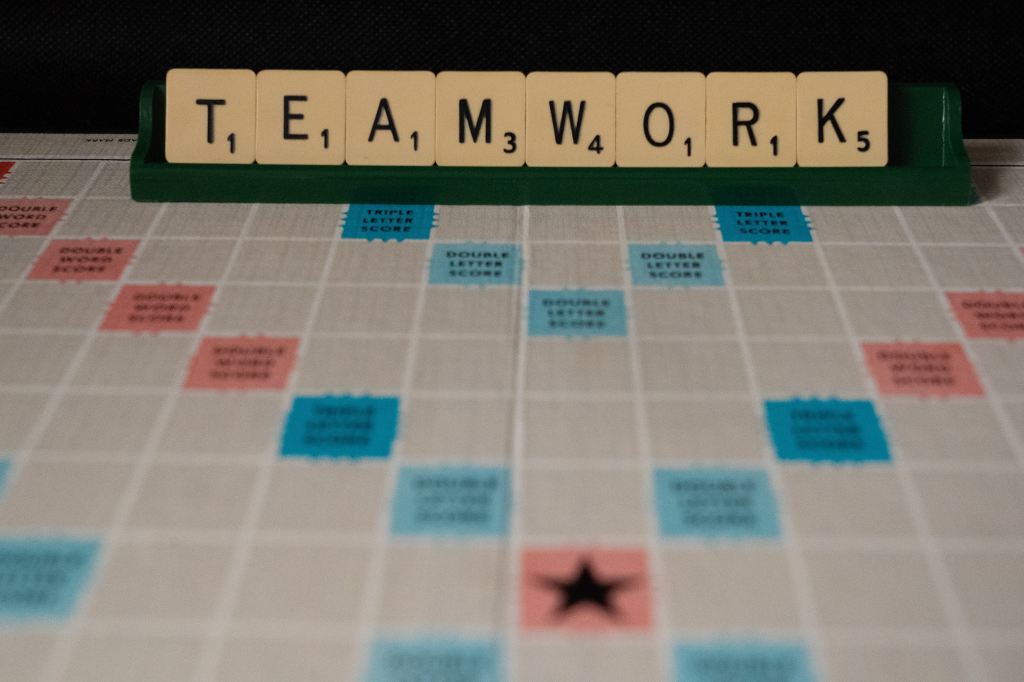
Team Work Makes the Dream Work – you should have each others backs. Life is hard and trying to keep work and home separate doesn’t always happen. Having an empathy for this, but also still living your team values, means that trust builds.
If behaviours improve, catch up with the individual and give them some positive feedback. This enforces the good behaviour.
Photo by Brett Jordan
What if Behaviours Don’t Improve?
It is important that you have open conversations with the individual about what is acceptable and what is not acceptable behaviour. They should be given the chance to improve and to understand their impact on you and the team. Using language such as ‘when you behave like this, this makes me feel ….’; ‘Can you explain why you behaved in this manner?’; ‘When you act like this, how do this make you feel?’.
However, there comes a time that if things do not improve, that more formal processes need to be followed. Document every conversation and share with the individual if you feel this is not going to improve, so that this can be provided as evidence. Your HR Department should be able to support you through this process, such as supportive methods like mediation, or more formal processes such as grievances, investigations and disciplinaries.
Remain factual, supportive and empathetic, but firm in your expectations.
Normalise good behaviours into your culture and they will start to embed – and accept that there will be some wobbles along the way – humans are not perfect!
Share your Good Work
If you learn various techniques, share with your leader colleagues.
Please comment on what has worked well for you on this blog – I’m interested in what works well and it’s good to share good practice.
For me it’s maximising your time to be as productive as you can. This can be work related or even home related. Making every minute count. Life is short, do you really want to be working your life away. You work to live, not live to work, live your best life.
We are on this earth once, let’s make that count.
I’m easily distracted, so for me short bursts are good. I’m also a list maker. It helps me manage my priorities. However, I’m also an avoider.
Anyone who knows me well knows I quite dislike data, which given part of my other life in Business Change and one of my tasks is benefits management. I have a love hate relationship with this particular area and it’s something I have to motivate myself up to.
Photo by Shivmirthyu
What do you understand about yourself? Do you procrastinate, or do you go full in and forget to lift your head for rest? I’m a bit of both, depending on what I have to do.
A few years ago, I was introduced by a technique by my current leader in ‘The Pomodoro Technique’.
This method is breaking up your day in 25-minute chunks with a five-minute break in between. After four Pomodoro’s you take a longer break of about 15/20 minutes.
The idea is instilling a sense of urgency.
I’ve used this recently when becoming overwhelmed with tasks. I had over two pages of tasks to do in one day. So, I prioritised and did the technique. I didn’t get through all of them, but I made a pretty good dent. It felt good that I had achieved a lot in that day which I didn’t think I would.
Photo by Anke Sundermeier
I’ve also come to realise over the years, that there will always be something that needs to be done. There will be a list of sorts.
So, my tips for time management:-
have a list – tackle the most important – prioritise and use the 80/20 rule (try and get 80% done)
delegate what you can, it helps develops your team, as well as takes the burden off your shoulders
be honest if you cannot meet a deadline, discuss if appropriate what to drop
say no when you know you cannot achieve what is being asked, or negotiate a different timescale. You don’t have to agree to every piece of work
take regular breaks, it keeps your mind sharper
manage distractions, if you don’t need your mobile phone, put it away
be self-aware, track your time – use techniques, such as the Pomodoro Technique with a timer, find what works for you
don’t sweat the small stuff – in most cases, it’s all small stuff
If you have techniques you’d like to share, please comment below
I have worked in many teams and I have found that those that have good leadership, communicate well and have defined goals/expectations are the ones that work best. When we all know what we are working towards, it means we can own it. We can come up with solutions, barriers and be able to work together on getting to the end game.
Leadership is especially important. This can be within the team or the leader of the team. You will have a range of team members with different personalities, those that can communicate well, those that may not be able to. Those that are ultra-confident and those which are not. Those that are more ‘bull in a China shop’ and those that are reflect more. There are strengths in all of these personalities and it’s important to have a balance, as it gives a comparison for decision making.
It would be easy to make decisions without determining risks, but also keeping it real. Yin and Yang so to speak.
Photo by Redd F
What makes a Great Team Work?
Being as open and transparent as possible. This means understanding your team, understanding what they are going through professionally and personally and allowing your team to express themselves. This doesn’t mean throwing all the toys out of the pram if they don’t agree with something, but being able to express what they are unhappy with and why. Keeping ego states adult.
To be able to work in an agile way, understanding that things change (and are constantly changing). That when this happens, to be able to take stock and not feel it’s unachievable. Understanding that it can be a bit scary when we are pushed out of our comfort zone, but if we all stick together, it will turn out fine, whilst still being open and honest.
Getting to know your team not just professionally, but personally. This means you get to know what their values are, why they are doing the job they are doing. You can tap into this and means that you start to create a ‘work family’. Families do not always get on and sometimes that happens with teams. It doesn’t mean it isn’t a great team. It means that we have to make sure we are all okay and sort out problems as they arise. Don’t sweep issues under the carpet. If someone isn’t quite right in your team, they are not quite themselves, check in with them. Creating a psychologically safe place and working environment.
Communication is paramount. Keeping your team up to date with things as much as possible. If you make a mistake, own it. You are allowed to be human. We are not perfect, but we can learn from these times. Ask for help, this doesn’t make you weak. Most people like to help each other and with a common goal as to the ask, it gives us motivation to do so and when you see the final result, it’s uplifting to be able to celebrate joint successes. To be able to do this as a team is amazing!
Say thank you (gratitude) and this is not just from leaders, but also within the team to each other. Most people will do anything for anyone. However, if that is taken for granted, that reduces significantly. Appreciate what your team do for you, they will appreciate what you do for them and looking out for their best interests.
Look after them and they will look after you.
Photo by Walls Io
Values and Beliefs
We all have values, whatever they are. Ask yourself, what is important to you? What goes against your values?
If you work within a team or organisation that goes against your values and beliefs, you will not be happy within yourself.
I have personally learned over the years, that if you work somewhere that does not value myself and/or my team, then it’s going to be really hard work and a chore. If I work within a team that does not have my back as I’ve had theirs, then I am going to be working in a toxic environment. If you have a team does not take ownership of tasks given to them and does not care, then you are fighting a losing battle. Find out why. Be clear on expectations of them, but of you also. When you have the opposite of this, you start to create an environment where it’s a pleasure to come to work. You look after each other and you can achieve great things together. There is empathy, compassion and understanding.
We work for a very long time, so it is important that we enjoy what we do, as much as possible. I’m not saying that it is going to be perfect all of the time. However, to be able to work with people who understand their impact on others, look after each other, take on work in a shared way, help out when a request is made, go above and beyond is the team I want to work in.
Photo by Priscilla Du Preez
Do you work in a Great Team?
I would like you to reflect on what you can do to make your team great. Do you all have a common goal? Do you help each other when the going gets tough, when timelines are pulled forward, or goal posts are moved?
How do you communicate with each other? Do you check in with each other? Do you have fun times, do you laugh?
The Oxford dictionary says its ‘The state of being happy”. Other sources say is that “happiness is an emotional, physical and mental state of wellbeing’.
Finding happiness is like finding yourself. You don’t find happiness, you make happiness. Self-actualisation is a process of discovering who you are, who you want to be and paving the way to happiness by doing what brings you the most meaning and contentment to your life over the long run
David Leonhardt
I get that quote. If I have joy, I feel happy. If I feel I am making a difference, I feel happy. If I have more positives than negatives, I feel happy. Finding myself, makes me feel happier.
Photo by Austin Schmid
I had to ask myself, ‘am I happy?’
The answer was no, I wasn’t. I’ve learned a lot about myself over the past few years and I’m quite comfortable asking myself that question and being honest with myself.
My feeling of making a difference changed. My son has grown up and doesn’t need me as much. My husband has health issues which impact him considerably and in turn, impacts on me. I have health issues, which sometimes even if I manage them well, gets me a bit down. I lost some team members at work to promotions and although super proud of them, lost a bit of me and my sense of purpose.
I felt I didn’t have as much joy as I used to.
So, I took stock and started creating my own happiness.
Creating my own Happiness
I’ve started to spend more time with my husband and friends. I’ve booked weekends away with my husband, or gone on girls weekends away. Making the effort to ensure we need to go out either together as a couple or with friends, enjoying life a bit more, taking a nice walk, going for an afternoon tea. I’ve also said to my husband that he needs to help his own happiness by spending time with his friends, we get joy from others too. Doing small things for others and being kind, bringing joy to others brings me joy.
I temporarily changed my job. This was a big decision, but it’s been good for me and also for my old team.
It’s the little things that make me smile and make me feel happy.
Smiling helps me be happy, laughter even more so. It releases feel good hormones, endorphins.
Exercising – I need to do more, but I’ll do what makes me happy, I am stopping putting pressure into myself.
Eat better – I love chocolate, but I’m not cutting it out completely. However, I’m balancing that with eating more fruit and veg and higher protein food.
Relaxing, going to the spa, people watching, talking to complete strangers to find that we all share similar thoughts.
Reducing my stress by not being judgmental with myself and others. This is a big one. It takes practice. Be my own best friend. Especially when I put myself down. Would I do that to a friend? No chance. So stop doing it to yourself.
Mindfulness and being in the moment. I’m still work in practice with this one during the day, but at night, I use Headspace and bring myself back to me.
Learning that life can be a bit of a roller coaster. In those times, keeping it real and that ‘This too will pass, it might pass like a kidney stone but it will pass’
A while ago I spoke to a friend and colleague about happiness. He said he looks more to contentment now than happiness. Life is full of ups and downs, so sometimes you will be happy, sometimes you won’t. But he has control over whether he is content and that brings him happiness.
I think that was a really good description. It’s much easier to recognise those times of contentment, about what brings you joy. When you do notice them, note them down or remember them. Do more of it.
So really think. What brings you joy?
Doesn’t have to be big.
Can you do more of that to bring contentment and happiness?