Championing Mental Wellbeing: Strategies for a Fulfilling and Balanced Life

Photo by Max Van-Den-Oetelaar

Wellbeing and Mental Health

What does wellbeing mean to you? The definition of wellbeing is’ the state of being comfortable, healthy, or happy’.  I wonder how many of us are completely this and how many of us have to work at this every day? I try to be mindful about this, but sometimes I even miss the signs and ignore them.

When we ignore our wellness, this can impact on our mental health.  Wellness and Mental Health generally goes hand in hand. 

We all know that eating healthily and exercise are two factors that enhance our wellness.  When we are not well – and I know it’s the case with me – these are two areas that are dropped quite quickly.  That’s okay, for a short while – who doesn’t want to have a big bowl full of ice cream now and again? 

Other factors which can impact your wellness are your emotional and psychological wellbeing, your social interactions and a sense of belonging, economics for example, money and sense of security and basic needs being met, as well as growing our own minds and experiences, intellectually.

That’s a lot to balance, so take one step at a time and don’t beat yourself up if not everything is aligned.

Photo by Total Shape

The Impact of Unprecedented Times

Covid has really raised the issue of mental health.  I know for our family, it impacted significantly, with my husband having anxiety and health issues and also his health not being fully understood by work.  His mum mental health with dementia also exacerbated with lack of social interaction.  Working from home impacted on my physical health of not moving around so much, especially with regards to my chronic pain.

How has all of this impacted on you and how do you deal with your own wellbeing since Covid? Have you had to have some time out just to get some balance back?

What Creates Wellness?

As I said before, I live with chronic pain.  I also support my family in their own wellbeing, which can sometimes impact on mine, but we are all in this together right?

So firstly, surround yourself with people who have your best interests at heart and who you trust.  You may not want to hear what they have to say, but if they say to you, you are not yourself, listen.

Photo by Sean Stratton

Take some time out for you

Be honest, how much time to you give to yourself?  Start now.  Have an evening of bubble baths, face masks and a glass of vino.

Book a massage or a facial, or even better, a spa day.  I have a weekly back massage for my chronic pain.  This is something I have done for quite a few years and it is now a bill that comes out every week – I would be lost without it and I no longer feel guilty about investing in my own wellbeing, this isn’t a treat, it’s for my health.

Be Mindful of Your Own Wellbeing

Do you find it easier to take care of others but not yourself? I do. It’s way easier!

However, if you put all your energy into everyone else, be careful of losing yourself. If you invest all of you into others, you can find you have no energy for you. Be mindful of this. You are allowed to put yourself first. I have to work on this constantly, because it’s easier to look after other people than myself. 

That being said, you can do something nice for someone else, with no expectation of getting anything back.  You feel good and so do they.

Eat Healthily

The odd naughty thing is not going to kill you, so enjoy those times too.  Fruit and veg is essential.  There are great books which help you eat healthily and not too much trouble to make meals.  I use Pinch of Nom and the Body Coach cookbooks.  Great little recipes, such as Chicken Satay, packed full of veg and very yummy.

Exercise

If you can’t go to the gym, go out for a walk.  Not all of us like the gym. Take your headphones and get some good yomping music on or just enjoy the nature around you.  You Tube also has lots of videos on Stretch Yoga or Pilates. 

Photo by Luke Chesser

Laugh

If you work, introduce a weekly half hour coffee morning and don’t talk about work. This is a really good way to be at one with your team mates and getting to know them a bit more.  This is really valuable to everyone in these virtual times of working from home.

Sleep

I struggle with my sleep. However, I was introduced to Headspace and ‘invested’ in myself and signed up full time.  It has a range of different packages to support you, such as stress, pain, sleep. I use the sleep package regularly and even have a nice velvet eye mask with built in speakers – amazing! So, I can listen to this and not worry about my headphones dropping out when I fall asleep. My brother also records on You Tube Affirmations and Sleep Hypnosis.  Amazing!

I also invested in a weighted blanket – it’s like a big hug.  This really takes away any anxiety you are feeling in our body.  Not for everyone, but definitely one for me.

Contact your GP or Nurse Practitioner

Yes, I know, it seems sometimes impossible to get hold of them, but if you have it, complete the E-Consult.  They will be able to support you in signposting to various organisations who may be able to support you with both mental and physical health.

Talk

This is the biggest thing yet. Yes, you will be vulnerable, but isn’t that better than trying to deal with things on your own? Be brave and courageous and seek out a trusted friend or colleague.  Just talking about it can help and they might actually share their experiences with you.  The more we talk about our mental health, the more acceptable it will be.  When you ask ‘Are you ok?’ say it twice.  Most reactions to the first ‘Are you Ok?’ is fine.  When you ask it twice, it makes the other person stop.  The answer may be different. 

My husband actually joined a man’s support group which was invaluable – Andy’s Man Club.  Amazing, just normal blokes who needed that extra bit of support in a safe and non-judgemental environment.  If you can’t find someone close who you can speak to, seek out organisations such as Mind and The Samaritans. 
Photo by Brett Jordan

Keep Learning

What is your passion?  You are never too old to learn new things, take up a new hobby, change career?  If you are unhappy, you can make opportunities to change it.  Be brave and courageous.

I’ve recently received training as a Mental Health First Aider. It helps me understand more to be able to help others.

Live, Love, Laugh (and if you can’t laugh, have a cry, it’s better out than in)!

Life is too short, so make yourself a plan and try and live your best life!

Please share your experiences of what has worked for you, so that we can learn to live our best lives.  Take care!

Andys Man Club

NHS – Mental Health Self Help Tips

Mind

The Samaritans

Headspace

Calm App

Mela Weighted Blankets

Cookbooks:-

Pinch of Nom

The Body Coach

If you have any questions or comments, feel free to contact me. If you are interested in being coached, contact me to chat through by booking a free 15 minute consultation Skyline Coaching Electronic Diary

Subscribe to my other posts by clicking Skyline Coaching Blogs and adding your email

Community Spirit in Times of Crisis and Cherishing Family Bonds

Photo by Liv Bruce

A while ago, my Dad called and he said ‘Just to let you know we were all evacuated this morning from the flat’.  He then went onto explain that his neighbour’s flat had caught on fire.  Someone was knocking really loudly on their front door for them to wake up, it was about 8am in the morning.  They frantically got dressed and went outside.

A person who had been walking their dog had seen billowing black smoke coming out of their neighbour’s bathroom window.  Luckily, she was at work, but sadly her pet dog passed away from smoke inhalation. 

My Dad lives just over from a Lifeboat Station and they came over with cups of tea for the residents.  They are all elderly, so must have been in complete shock.  My Dad is in his 80s, so you can imagine the shock he was in, I know I was shocked and I wasn’t even there at the time.  A local café owner came over in their mini-bus, took them all to his café and gave them hot drinks and toast until they could all go back.  I find it just lovely that there is still a community spirit and at times like this, you really need it.

This news shook me to the core, because he’s not getting any younger (neither am I) and it makes you think about the future, he won’t always be around.  It puts things in perspective.

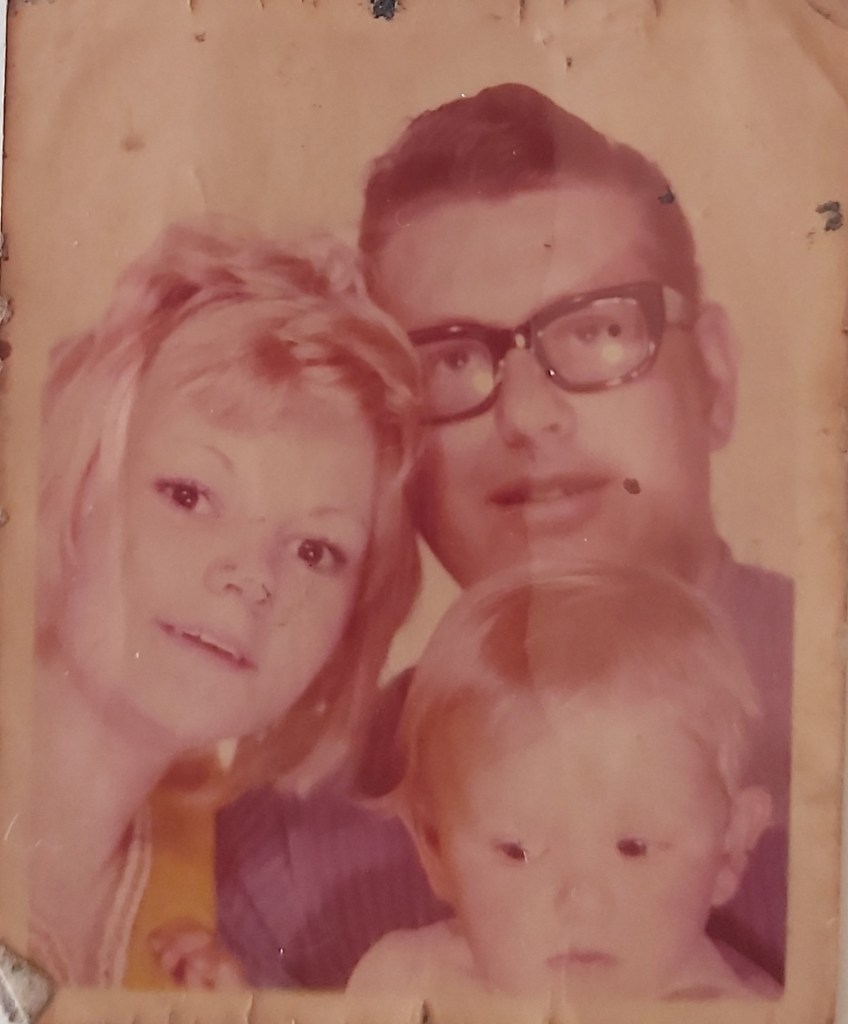
Mum, Dad and Me

My Mum and Dad divorced when I was 3.  I didn’t really see my Dad until after I was 16, for one reason and another.  We are really close now.  He made mistakes, so did my Mum, but it was their life and I understand that.  You can either take sides, or take a step back and take it for what it is. 

My Mum married at just 16 and my Dad was quite a bit older than her.  I was born when she was 17 and a half, babies having babies really, when we both talk about it now. 

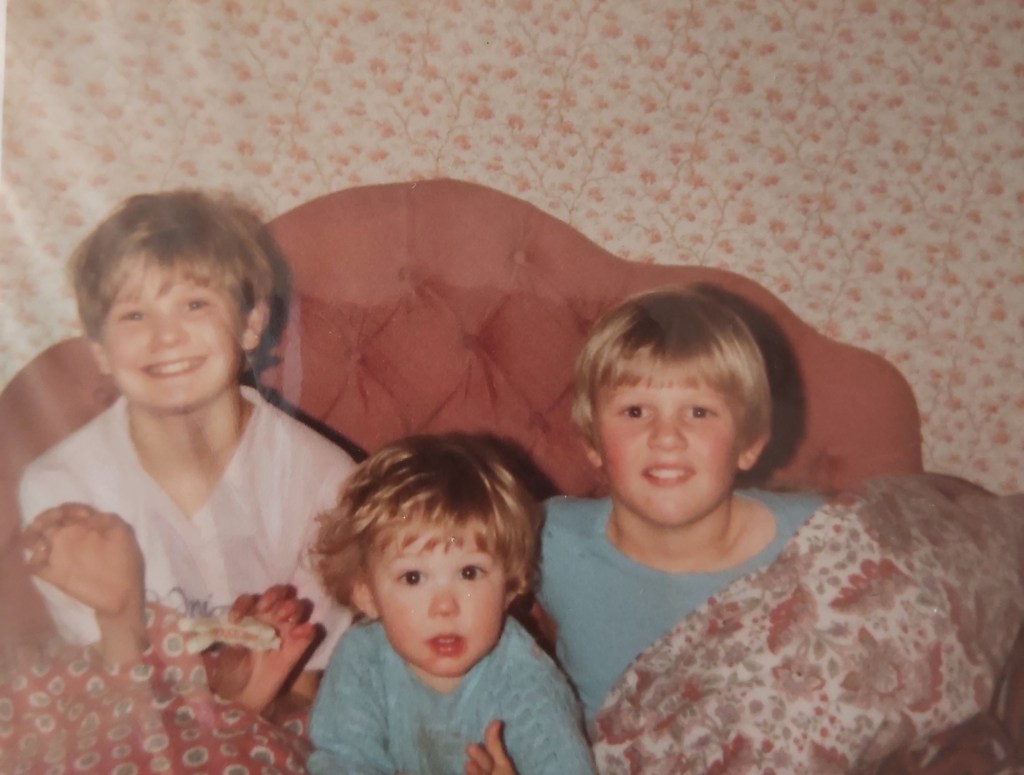
Me, Michael & Stephen

My Mum worked different jobs to keep a roof over our head and food in our tummy’s.  She went without so we didn’t have to.  I grew up really quickly to help her look after my brothers.  It’s made me the person I am and also stand up for what is right.  We all turned out pretty okay in the circumstances and my Mum is now happily married again (many many years later).  She is a super strong woman, generous and can sometimes be argumentative (not sure the apple has fallen very far from the tree when we both think we are right).

I’m not going to say it was easy, we’ve all had our disagreements, but we are always there for each other when we need each other.  We are connected in a way that whatever happens, we will always drop everything and be there for one another.  That being said, sometimes we have had to have our space and stay away from each other, but we always get back together.

I listen to other people talk about their families and they are much the same.  One of my best friends though, her family never has disagreements.  Is this normal or not?  I aspire to have our family like this, as the stress it causes having disagreements, family members taking sides can completely destroy a family. 

What are your family like?  Do you all get on, do you have disagreements, do you all make up and crack on with making memories, or have you walked away for your own sanity?

No judgement, you have to do what is right for you, but if you have loved ones, give them a cuddle and remind them how loved they are.  We take for granted that they will always be there and as most of us know, they won’t be.

Stay safe, test your fire alarms and make loads of memories with your loved ones.

Subscribe to my other posts by clicking Skyline Coaching Blogs and adding your email
Mastering the Art of Communication: Breaking Free from Diminishing Language

Photo by Biljana Jovanovic

What is Diminishing Language?

I never even knew what this was until I came across this article by Audrey Zander on LinkedIn.  Audrey raises the subject of using ‘modifying’ language Audrey Zander – Diminishing Language Post

‘Diminishing Language’ or ‘Modifying Language’ is language that makes our point weaker and less credible. It is a language which is like an apology before saying what we think or needs to be said.

So, Audrey’s article really made me think and resonated with me.  Not only because I use this sort of language myself, but a few people around me use it too.  We do it because maybe we don’t want to upset or undermine someone we are talking to.  Not wanting to come across as too assertive, that it comes across as arrogant or aggressive.  However, what really happens is we undermine our own credibility by making our points less effective and can impact our self-confidence.  Especially if it is a valued point or needing to update someone as to the correct information.

Language such as ‘I’m sorry but can I say ….’; ‘I feel ….’; ‘Can I just say ….’; ‘I just called to say …’; ‘I thought you should know …’.  Do you use this language?

This isn’t just about women using this language either, I find men use it also.

Photo by Anja Bauermann

Why do we use it?

I wonder if it’s about the culture we work in?  I used to work in an all-male environment many moons ago.  I reflected back as to whether I used this language then, but I don’t really recall that I did.  I was much more assertive and the culture was that you said what you thought, kept it to the point to ensure you got your point across.  In a way, no holds barred.

Since then, I’ve worked in a female dominated world, albeit men still in higher up roles with regards to leadership. Has this had an impact on how I see the world, be it a gentler culture with regards to healthcare? Is there an expectation to be more ‘fluffier’ with regards in how we communicate. There is a difference between being kind and being direct with mindfulness. I was called too assertive when I started with this organisation. Maybe so.

The environment you work in also has an impact.  I have worked in various environments with the organisation I am currently with.  Some environments I have to be mindful of how I communicate, whereas in others, I can be more direct and assertive.  It’s a balance and being aware of my audience and how to frame communication – I don’t always hit the right mark which can make the person/audience defensive.  For me, this then makes me more mindful to soften my words, however, this can affect confidence.  Does this affect my integrity? For me it does, which does not sit well with me.  So, it’s about learning what feels right, but is received well.

What do we need to do to change this?

I have started to become more mindful about using words before I want to make a point.  By doing so, it actually gives you more confidence. If you believe what you are going to say, use confident language to ensure it is believable to the recipient.  It is important that this becomes natural, so that it doesn’t feel false to you.  Also, to reflect regularly. Did you use modifying language and if you did, how could you have a different conversation next time.

Stop saying ‘Sorry, but …’.  Am I really sorry before I say something? Sometimes, not what I’m going to say, but that it may impact negatively on another person.  Framing what you are going to say is important.  Learning about how it is going to be received by understanding the personality of the person receiving the information.  Lots to think about and lots to learn, which is not a bad thing to understand those around you.

Do I have a duty of care on how people receive information and their response to it? I have a responsibility to myself and to maximise the way I communicate to ensure my point is taken on board as credible, listened to and action taken if required.  For me, thinking about what I say and how I say it, may affect my credibility and confidence for the better.  In addition, it affects those around me, they are less defensive, taking on board my perspective and me taking on board theirs.  I am starting to use different words instead of ‘I’m just updating you …’ such as ‘I wanted to update you …’; ‘I’m confident in …..’ instead of ‘I feel ….’. Stop finishing off a message with a question such as ‘Don’t you think?’. 

Communicating well is good for everyone concerned.  We are human, we sometimes don’t want to hear what is being said.  It is important that everyone has a voice which is respectful, language which enhances the message and remains authentic. You don’t have to use modifiers to do that.  Learn and improve by reflecting back.  The use of your language may rub off on those around you.

I would be interested to know if other people use modifiers in their language.

Supporting Materials

Audrey Zander – Don’t kneecap your sentences

Forbes – Do you Sabotage Yourself by using Weak Language

A Woman’s Guide to Eliminating Low Power Language to Increase Influence & Authority in Business

Thomas Brown, Interview Coaching Solutions – Minimizing Language Undermines Communication. Avoid It!

Debbie Fay – Elevate Network – Everyday Words that are Diminishing Your Message and You

Subscribe to my other posts by clicking Skyline Coaching Blogs and adding your email
Breaking Point to Breakthrough: My Journey Through Burnout and the Lessons Learned

Photo by Gerd Altmann

What is Burnout?

Burnout occurs when a person has been under a significant amount of stress over a long period.  You feel overwhelmed, emotionally drained and unable to meet the constant demands on your time.  This not only impacts you emotionally, but can impact you physically, with mental exhaustion.

My Story

I didn’t see the wall coming. I felt it came out of nowhere.  I was a strong, hard-working individual who was very resilient.  Or so I thought. 

I was working operationally within the NHS and working excessive hours, with an immense amount of pressure put on me with little to no support from my superiors.  I felt responsible for ensuring patients did not breach their target dates for their appointments.  I was supported well by my team beneath me, however. I felt I had little support from my superiors to find solutions due to lack of capacity to bring patients in.  My perception was there was an expectation to just make it happen.

In hindsight, I should have looked after myself better and escalated further up, but I felt I was not being heard.  The wall hit after a clinical colleague complained because I was chasing for work to be completed as it was overdue.  I felt bereft, I was doing my best, but it was a constant uphill struggle of juggling workload, expectations, responsibility for those around me, for our patients and more importantly, for my family, as I was not there mentally or physically for them.

The day I hit the wall I remember seeing my specialist nurse in clinic about my condition.  I was poorly with a particularly bad flare of Ulcerative Colitis and got to the stage that it was unmanageable.  I cried through the whole appointment.  I made the decision I was not fit for work.  This was a really tough choice, as I felt I was letting my team and department down.

When I spoke to my GP about it, she said ‘Mechelle, I saw it coming’.  I regularly saw my GP for acupuncture as a way to help manage my condition in addition to medication.  When she said this to me, I couldn’t understand why I didn’t see it coming. I was too entrenched and fire fighting was the norm of my working day.

Photo by Nguyen Dang Hoang Nhu

The Worst Time and The Best Time

I look back now and think at the time, it was the worst time in my life, but also the best thing that happened to me.  I felt unable to function, was particularly poorly physically and mentally, was unable to even have a proper conversation without crying. 

However, upon reflection and coming through that period of my time, I thank the person who pushed me over the edge.  Ironically, that person ended up burning out as well.  We were all on that treadmill, trying to do our best, but just not supported enough to meet the unrealistic expectations required of us.

Support

After a few weeks of being signed off, I realised that I needed not only rest, but help with my mental health.  I sought the support of a counsellor.   We talked about a range of different things that impacted me.  My feelings of taking on the responsibility on my shoulders, my childhood, the workload, what I could do to help myself e.g. taking time out, walks in nature, managing my own wellbeing e.g. doing something for me like having a massage regularly, the expectations I put on myself, my family and the impact of me being poorly on them and me – how could I take more control of the situations I was put in, the feelings of guilt being off sick.

I was off work for 3 months, advised to be off for 6 months.    In hindsight, I should have taken more time off, as I was still not as resilient as I could have been.

Photo by Sage Friedman

Learning About Yourself

I have always tried to proactively manage my physical condition, but I didn’t actively manage my mental/emotional condition.  Hitting that wall meant I had to face up to a few things.  I learned more about myself during this time, than the whole of my life.  A positive spin on a very unhappy period of my life.

I learned about what triggered me, to take more importance in self-care, enjoying the simpler things in life like going for walks and nature, I tried to be more mindful to help me become more resilient.  More importantly, I decided if I ever started going down this path again, I would stop and take stock.  I was going to learn from this event and I did.  I left the job and went to work somewhere else.

Going through burnout also meant that I became more empathetic to others and could see others going through the same thing, which meant I could pre-warn them.  When you see people not being themselves, being brave to have those conversations can mean a lot.  To build relationships built on trust would mean I would be able to support those who had hit that wall or try and pre-warn them that they were not being themselves and to take stock.

I even had a tattoo on my wrist to remind myself to take care of my mental health and physical health, to accept when I was sensing those feelings.  I read quite a bit to try and self-help myself and have become an advocate of supporting good mental health.

Photo by Toa Helftiba

Time for Me

I have a weekly back massage – sounds nice, but it hurts as I have chronic pain.  It helps my body repair itself.

I use Spotify meditative podcasts nearly every night.

I have a new spa bath, which really helps me relax.

I try and laugh as often as I can.  When I can’t, I know it’s time to step back.

I still read self-help books – keep things in perspective – nothing is worth going back to that dark place again.

I talk – I talk to my friends, I talk to my colleagues, I keep a check on those around me and they keep a check in on me.

I have regular informal coaching, which helps give me the headspace to get myself in the right place. It also reminds me to not be the problem solver for everyone and be relied on. For me to relinquish control to help develop my team around me.

I pay it forward the help given to me, by mentoring others sharing my experiences.

I try to be kind and do random acts of kindness.  I believe it comes back to me two-fold, it makes me feel good and it makes the other person receiving it feel good.

I hope this helps you be more mindful about your mental health.

Photo by Kevin Delvecchio

Checking In on Family/Friends/Colleagues

If you see someone who is not themselves, ask them if they are okay and then ask again.  People can be proud about not admitting that they are being overwhelmed and the more we speak about it, the more the effects on mental health will be accepted.  Our bodies can only take so much stress and I wouldn’t wish those feelings on anyone.

It’s not just about sharing my story, but being able to signpost.  There is support out there and when you need help, sometimes it’s not always available.  However, offering a listening ear is sometimes all that is needed, to let someone know they are not on their own and they will come through this.  So, talk about it more, it’s nothing to be ashamed of and you may be able to help prevent someone going through the same thing.

I still have times when I feel overwhelmed, but I recognise the signs now.  I also have an amazing support network around me where I am checked in on and vice versa.  I feel very lucky and I am very mindful to share my story to help others and keep an eye out for those that may be going through a tough time. 

#ItsOkNotToBeOK

The Chimp Paradox

Don’t Sweat the Small Stuff (and it’s all small stuff)

NHS – Every Mind Matters

Mind

Project Semi-Colon

Andy’s Man Club – A talking group for men

NHS Voluntary Charity Services

Headspace App

Calm App

The Samaritans

Project 5 for Health Care Workers

Burnout Help Guide

Subscribe to my other posts by clicking Skyline Coaching Blogs and adding your email
Embracing Positivity: Navigating Life’s Challenges with Optimism and Kindness

Photo by Camille Brodbard

Are you a glass half empty or half full person?

Now don’t get me wrong.  I’m a person who is usually a glass half full kinda girl.  I’m not always though. I live with chronic pain and Inflammatory Bowel Disease (IBD).  When I have a flare, life gets a little bit more complicated, both physically and mentally.  My way of coping with it is to look at the positives.  I have a good support network around me and my pain tells me I’m still alive. Being positive though doesn’t mean everything is rosy. I am also a realist.  When I am feeling glass half empty, I have to allow those feelings and take a step back. However, I am also an optimist, I tell myself, ‘this too will pass’ and it usually does.

So how do you become more positive and optimistic, especially at times like these when we have been living in lockdown, the way we work has changed, being away from our loved ones? 

Photo by Kraken Images

Laughter is the Best Medicine

For me, when I am going through a rough patch, I use humour.  I have a dark sense of humour and luckily, I have people around me who understand me.  Laughter helps me with my pain, it releases endorphins.  So, when I’m in a bad place, I will say to my boss, ‘Don’t be nice to me or I’ll cry’.  I get a bit more emotional at these times.  She’s fabulous.  She’ll say to me ‘Pull yourself together Mechelle’ and she’ll say things to get me to laugh (usually when I’m crying at the same time). 

If anyone heard us, you’d think she was being really quite harsh, but she knows what I need, she knows when I’ve pushed myself too far and when to challenge me to take a step back, reminding me of what we have accomplished.  We have a conversation of what is real and the positives of a situation.  We both do this for each other when things may not be going as they should be.

That is trust, where we can both be vulnerable.  We are psychologically safe.  We have each other’s back. 

Positive People vs Mood Hoovers

I have surrounded myself with grounded people who are not afraid to check in on each other.  I try very hard not to have ‘mood hoovers’ around me.  They drain me of my positiveness, my silver lining around the clouds.

For me, work is a distraction, keeping my team’s morale high helps me pick myself up.  In a way, it is about positivity breeding positivity.  So, most of the time, this will mean I will be positive and optimistic even when I’m not fully present mentally or physically.  I know that someone has got my back and this moment in time will eventually improve.  Why?  Because generally it always does.  That is how I want to live my life.

How do you want to live yours?

Photo by Nick Fewings

How to become more Positive and Optimistic

How do you pull yourself through these times?  Do you look at the good of a situation or do you look at the negative?

Do you surround yourself by shiny stars or mood hoovers? 

Try and surround yourself with people who can pull you up, not drag you down.  I’m not talking about your life being really fluffy, but if you surround yourself in people who do not want the best for you or challenge your thinking, are you creating an environment where you can be positive and optimistic for the future? 

How do you start your day or week? Do you start your day being positive? Or do you start the week thinking ‘It’s Monday, I can’t wait until the weekend’. 

How about looking at ‘What will we/I achieve this week’, ‘How many people can I make smile when I walk down the corridor today’.  This is one of my favourites – and when I’m down, I’m even known to wave at people in cars – much to my son’s disdain. They generally wave back and I know they’ll spend the rest of the day thinking – who was that?  Smiling at people walking down the corridor is a bit harder these days with masks, but if I smile, my eyes will crinkle and they will make contact with another pair of eyes.  If their eyes crinkle, I know I’ve spread my smile to someone else. 

Would that lift your mood if you caught a smile from someone else?

Photo by Gabrielle Henderson

Practicing Gratitude – Random Acts of Kindness

Another way to be positive is to do a random act of kindness with nothing in return.  Paying for a coffee for the person behind you. Sending a thank you card for something that someone did to make your life easier.  You get a feeling of joy and so do they.  It doesn’t take much.

Be really nice if you have to speak to someone dealing with a complaint.  You don’t know what they have had to put up with that day. Treat them as a human being.  Be kind and live your life kindly.

What random act of kindness will you do today?  I look forward to hearing your stories.

The Art of Being Brilliant – Andy Cope and Andy Whittaker

Zest – How to Squeeze the Max Out of Life – Andy Cope, Gavin Oates and Will Hussey

Smiling is Infectious by Spike Milligan

Simon Sinek – How I became an Optimist

Subscribe to my other posts by clicking Skyline Coaching Blogs and adding your email
Navigating Ambition and Integrity: Embracing the Power of Purpose-Driven Leadership

Photo by Gerd Altmann

Would you be Happy to be called ‘Ambitious’ and ‘Driven’?

I’ve been called ‘Driven’ and ‘Ambitious’ a few times over my career, which I took as a negative.  Once at an interview and another at an appraisal.  I didn’t understand why, because I’ve never put myself out there to get as high up in an organisation as I probably could have.  I have always just wanted to do a job really well and to make a difference.

I spent some time talking this through once with a colleague and I remember getting a bit emotional about being defined by someone as ‘Driven’ and ‘Ambitious’.  She helped me look at myself a bit deeper.  I was ambitious to ensure that the work that I did with those around me was recognised.  Yes, I was driven. I was driven to ensuring I and we made a difference, to stand up for those who could not stand up for themselves.  To never give up when the going got tough. 

The Definition of ‘Ambition’ and ‘Driven’

She told me to look it up in the dictionary which I did.  That’s when I accepted it’s not that bad to be ambitious or driven. 

  • Ambition – a strong desire to do or achieve something/desire and determination to achieve success
  • Driven – Relentlessly compelled by the need to accomplish a goal; very hard-working and ambitious

I’m what you call a plodder who never gives up.  In fact, when I want to give up, I’ll have a wobble, then get back on that horse and try again.  A previous Chief Executive called me a ‘Jack Russell’ because he said that once I’ve got my teeth into something, I don’t let go.  My core values were to have integrity and to work hard – to earn my salary.

So, why did I get so upset about being depicted as such?

My previous experience with some people I worked with over the years, was that they would do anything to get where they wanted to enhance their career.  In fact, they would take the credit for things myself and their teams had undertaken, to make themselves look good.  This has never sat right with me.  You do not get to the top on your own, you are supported generally all the way by the people around you.   I have always been brought up to have integrity.  Is this a little bit old fashioned?

Photo by Brett Jordan

Would you lose your Integrity for Ambition?

I’m not going to lie.  I do worry about what people think about me.  I’m human.  However, it is really important that I have integrity and that I have a good reputation. 

For me this means:-

  • Sticking to my word, if I’m going to do something, I will.  If I can’t, I’ll say;
  • Be assertive and determined (I learned this by working in an all male environment);
  • To be as positive as I can – I’m not 100% perfect at this, but who is;
  • To listen, to be empathetic and to follow through on promises and support those around me;
  • Being on time for meetings and being as prepared as I can be;
  • Hitting deadlines or returning calls;
  • Ensuring those that have done the work, get the recognition – it is one big team always!
  • Making as meaningful a difference as I can by doing my job and supporting my team both professionally and personally.
Photo by Hannah Busing

Can Ambition and Integrity Work Together?

Yes, I really believe it can.  When you work with people all with the same motivation to make a difference, our performance rises.  Our motivation increases, we don’t give up, we learn lessons and improve for the next time.  The team individually gets recognised for things they have achieved and together as a whole.

And that’s when I’m the most ambitious and driven – because when you see people come together for a common cause, why wouldn’t I be hungry and excited for that and the feelings it gives me and them?  When the unachievable becomes the achievable.

In the words of Simon Sinek ‘A small team, committed to a cause bigger than themselves, can achieve absolutely anything’.  I’m consistently proud of my team and they make it easy leading them and remaining true to myself.

Useful Information

Karren Brady on Ambition, Determination and Integrity

Simon Sinek on ‘Why Leaders set the tone, so integrity is everything’

Brene Brown – How can you Lead by Example and Live an Authentic Life?

Subscribe to my other posts by clicking Skyline Coaching Blogs and adding your email
Discovering Your Authentic Self: A Journey to Self-Reflection and Genuine Living

Are you being your Authentic Self?

I ask this question, because when we grow into adulthood, many of us simply try to keep other people happy.  When this happens, we can actually lose ourselves.

Have you ever stepped back and wondered, who am I?

So, what’s important to you?

Continue reading “Discovering Your Authentic Self: A Journey to Self-Reflection and Genuine Living”

Leadership Unveiled: Navigating the Path to a Psychologically Safe Environment

Photo by Rob Walsh

Leadership – What does it mean for you?

When you first go into management, do you have the necessary skills to undertake the role? Did they tell you that there is an expectation for you to lead your team over the finish line, time and time again?

I remember my first management role.  It was scary.  Everyone looks to you (or so you think) that you should have all the right answers.  You are in the role for a reason, aren’t you? Shouldn’t you know the answers to every problem?

This is what you aren’t told!

No, you don’t need to know the answers to everything.  When you learn this, this is when it gets exciting.  You are surrounded by various expertise, various minds that think differently, different personalities and personality traits, easy to work with people, some difficult to work with people that can be challenging.  How boring would it be to be surrounded by the same sort of people? You need this mix to bring the best out of everyone.

So, what is ‘Leadership’?

When you have a great team around you, you get the best of both worlds.

You may have the answers, but do you need to give them to your team?  How do you grow and develop your team, if you give them the answers to everything? Do they have the answers within them and they just haven’t had the chance to try?

The letting go of control is sometimes the hardest part, but when you do and allow your team to find their own way, make mistakes and learn, it’s actually quite magical.  They may need a bit of help along the way, but if you can show that you trust them (and this comes with time), they begin to trust you.  Trust is what it is all about.  When you trust your team and they trust you, there begins a relationship where you have each other’s backs.  Create a sense of family, empathy, compassion, understanding, look after each other.

When you start developing and trusting your team, performance increases, everyone is happier in their work and when the chips are down, they try their best to ensure no-one fails. 

You begin to create a psychologically safe environment.

What is a Psychologically Safe Environment?

In its simplest form, it means that anyone, including yourself as the leader, can show vulnerability, can speak up without the repercussions of being told to be quiet, you are listened to, your team members are listened to, team members can positively challenge their leaders in thought processes and vice versa.  It is a safe environment for people to be their best selves, to be allowed to grow, make mistakes and learn all the time. 

How does that sound to you?  Do you have a psychologically safe environment and if not, are you able to create one? Do you want to be a leader and have your teams follow you?  You need to earn it and you need to grow leadership within your teams.  Get to know your teams, you work with them for a really long time – create that ‘Work Family’.

So, what are your thoughts on leadership?

Supportive Material

Some supportive material around leadership by Simon Sinek which is easy listening and I hope it makes sense to you.

Leadership has nothing to do with rank

The Most Important Trait of a Leader

Simon Sinek You Tube Channel

Do you want to improve your leadership skills?

If you want to improve your leadership skills, even if you may not currently be officially in that role, please contact me via mechelle@skylinecoaching.co.uk or calling 07984744387.  This is an area where you can make life changing experiences around those you in leading for the future.

Subscribe to my other posts by clicking Skyline Coaching Blogs and adding your email

Understanding Anxiety: Recognising Signs and Embracing Coping Strategies

Photo by Pete Linforth

Levels of anxiety are normal; it’s part of most peoples lives.  However, when it gets out of control and starts impacting detrimentally, it can cause problems to your life day to day. 

Common anxiety signs and symptoms include:

  • Feeling nervous, restless or tense
  • Having a sense of impending danger, panic or doom
  • Having an increased heart rate
  • Breathing rapidly (hyperventilation)
  • Sweating
  • Trembling
  • Feeling weak or tired
  • Trouble concentrating or thinking about anything other than the present worry
  • Having trouble sleeping
  • Experiencing gastrointestinal (GI) problems
  • Having difficulty controlling worry
  • Having the urge to avoid things that trigger anxiety

We lead very busy lives; this comes with responsibility and a lot on our shoulders for the most part. 

So why do some people seem to be more anxious than others?  We have this inbuilt in us – the fight or flight response.  Do you face things head on, or do you run away and avoid or get emotional?

Anxiety occurs due to our various experiences, how our childhood was for instance? Did you feel good enough? Were you praised or told you could have ‘done better’? Are you always trying to prove yourself and be perfect? How do you live now? Are you settled or is there fear?

If you work, what is the culture, what are your responsibilities? Do you feel responsible for everything and everyone? Are you able to accept that you may make mistakes or is this held against you?  Medical conditions can also impact on whether you have anxiety, such as medications or changes in your hormones.    

These are just some examples of how life can affect you and cause anxiety.  The trick is how to recognise it, manage the feelings, emotions and symptoms and take back some control.  You may be able to do this yourself, or you may need help from a professional, for example, either through counselling, Cognitive Behavioural Therapy (CBT) or medication.

I want to really make a point here, having anxiety is not a weakness.  It is your body’s way of telling you something isn’t right and its way of coping.  Sometimes, we all need to be gentler with ourselves and sometimes, we need help in getting back to the way we can cope in the main with life.  That is what makes us human.

Photo by Christine Sponchia

Coping Strategies

Be completely honest with yourself.  You can keep saying you are fine, but if you aren’t, you will not become less anxious.  So here are some tips.

  • Learn techniques on how to ground yourself – For example, find 5 things you can see, 4 things you can touch, 3 things you can hear, 2 things you can smell and 1 thing you can taste. The impact of this slows you down, gives you comfort to be able to feel in control of the situation.
  • Take some time out, do something for you. Meditate (it took me a long while and I’m still work in progress on this, but Headspace is great and even my son uses it), get a massage (I have one every week, it is now a bill and it’s for my wellbeing – I do not feel guilty for this), listen to music, learn and do things to relax, take a step back to help clear your head
  • Eat well and healthy – the odd naughty thing isn’t going to make that much of a difference, so don’t go hard core, otherwise you’ll never keep it up
  • Reduce your alcohol and caffeine – I tend to only drink decaf these days and my gin club has now gone quarterly!
  • Sleep – do you get enough? Have a regular sleep routine, take a bath before bed to relax you
  • Exercise – go for a walk in nature, park your car a little bit further so you take a bit longer after work to get to it, take a walk at lunch time, do some yoga.  Little steps, try things out to see if they are for you, experiment and build it up – it releases natural endorphins
  • Breathe – deep from your tummy – you can do this with guided meditation also. It slows your body down.  In some situations, count to 10, breathe, if that’s not enough, count to 20
  • Do your best, but be realistic – no-one, absolutely no-one, is perfect, you cannot control everything, sometimes bad things happen for good things to happen, keep things in perspective and try not to overthink.  I read ‘The Chimp Paradox’ and that really helped me understand how the brain works
  • Laugh – some things are sent to try us and humour also goes a long way in helping you with how you bounce back from things that can affect you.  Surround yourself, if possible, with people who build you up and don’t want to tear you down.  This can help you with positivity in that not everything is unsurmountable or unable to be dealt with
  • Learn what triggers your anxiety – start keeping a diary or journal – when you get that feeling, look deep as to what has happened and reflect back over these entries for a pattern
  • Talk – Sometimes we don’t want people to know we are feeling overwhelmed, especially I have found with those in authority or responsibility.  Find a trusted colleague, friend, leader or professional that you can talk to.  They may not be able to solve the problem, but a problem shared helps support your wellbeing

30 Grounding Techniques – Healthline.com

The Chimp Paradox – The Mind Management Programme by Dr Steve Peters

Don’t Sweat the Small Stuff – and it’s all Small Stuff – By Richard Carlson

Mind – Anxiety and Panic Attacks

Every Mind Matters – Anxiety

A Guided Walkthrough to calm Anxiety Attacks

Toby Robbins – How to stop overthinking

Headspace – available to download as an app

Calm – available to download as an app

Subscribe to my other posts by clicking Skyline Coaching Blogs and adding your email

A Journey Through Wellbeing, Work, and Personal Growth

Photo by Wokandapix

Over the past few years, I’ve seen a lot about resilience, I even went on a course about becoming more ‘resilient’ when I burned out.  I questioned then about how resilient most people are.  Maybe that they are too resilient, that the expectation is that we should be even more so.  From that time on, I actually disliked the word ‘resilient’.  I felt that if you were not resilient, you were weak, when actually I had coped time after time to the detriment of my own health.

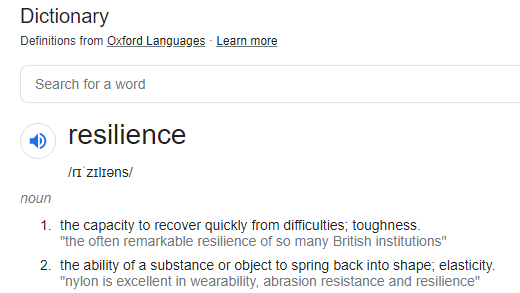
The definition of resilient is ‘the capacity to recover quickly from difficulties; toughness’.  Normally, most of us can do this. Basically, how well we ‘bounce back’ from difficult events.

Working in healthcare, I have found that over the years, that we are quite hard on ourselves and sometimes on those who work for us.  We are in a caring industry; however, this can be forgotten due to the amount of work expected.   During the covid pandemic, there was a level of resilience like no other from all manner of staff working in the NHS, those working clinically, those trying to support those clinically and management who were trying to support those around them and keep up with the Government mandates of trying to keep both the public and their staff safe.

There are so many expectations from healthcare staff, our patients, patient’s relatives, management, Government; that we can easily forget about how we are feeling and coping.  The amount of pressure that is put on staff to hit targets, to ensure every patient is booked within a certain amount of time, to ensure patients are seen in ED within a certain amount of time, that we are hitting government targets otherwise we will be penalised. 

This pressure is not just the on the shop floor staff, but as high up as Executives.  They have targets to meet too.  This leads to burned out staff, which then leads to lack of capacity and then on that hamster wheel again about being able to hit targets.  This is just one example.  I’m sure that there are many of you are in the same position working for corporate companies who have to hit targets.

The question here is if you are resilient, how long can this continue without you losing it?  If the pressure is day in and day out, is it reasonable to expect an individual to maintain resilience?  No, I don’t believe it is.

We all have control over what we can and cannot cope with, to say when we are out of battery charge.  We have to each take responsibility for our own wellbeing.  We need to be gentler with ourselves and say we are not okay and sometimes say ‘no’. This is not a sign of weakness; this is actually strength of listening to your body and understanding when you need to stop.

I’m not going to lie.  I sometimes don’t look after myself enough, there are times when I put myself under immense pressure because I have people relying on me.  However, I have created a great support network around me that calls me out.  We rely on each other to take care and be a gentler with ourselves.  So, learn the signs of when you are not quite right and need a bit of time out.  Be brave and say you when are not okay.  Yes, it may feel like you are being weak, but without talking about this, we will not improve how we deal with bouncing back and mental health wellbeing.

So here are some ways to understand when you may not be bouncing back as you usually do.  Use these to ask yourself if you need to stop.

  • Irritability and overreaction
  • Over-emotional/crying
  • Dwelling on problems and overthinking
  • Trouble sleeping
  • You blame others
  • You go beyond your limits
  • You are afraid to ask for help
  • You compare yourself to others
  • Run down/persistent illness

Everyone can learn about resilience/bouncebackability, not only personally, but for those around us.  If you are a leader, do you have an environment that contributes positively for resilience, do you keep an eye out for your team, do you have regular 1:1s with them, do the team have proper breaks, are they listened to and treated as adults, do they respond as adults and not as children?

As an individual, do you feel safe to speak up, do you help your leader create the conditions to look after one another, supporting working environments, do you learn from those times when you have not bounced back as normal, creating strategies to look after yourself, caring about those around you if you think they are not themselves?

If we all invest in this together, how much better would you feel?

So, I’m going to end on that I’m still a work in progress.  I actively look out for my team, especially if they are not quite themselves and I try hard to care for myself.  Why? Because I wouldn’t wish being in that dark place on anyone else.  I sometimes slip up and don’t look after myself, but I keep on learning and improving. 

Some strategies that you may find helps – and they aren’t for everyone, you just need to try and find out what works for you:-

  • Meditation – for relaxation
  • Mindfulness – for relaxation
  • Walking in Nature
  • Exercise
  • Singing
  • Laughter/Humour
  • Maintain perspective
  • Good sleep routines
  • Caring for yourself, bit it a warm bath before bed, or a facial
  • Be flexible
  • Create a support network
  • Be a plant – feed and water yourself in order for you to grow and bloom!

Support Materials

Lucy Hone – 3 Secrets of Resilient People

Raphael Rose – NASA Research

Simon Sinek – Building Cohesive and Resilient Teams Based on Mutual Trust

Mind – How can I become more resilient?

Beano for Schools – Bouncebackability – Mental Health & Wellbeing KS1 & KS2

Subscribe to my other posts by clicking Skyline Coaching Blogs and adding your email